
Google Authenticator App Store: Download, Setup & Best Apps
Published August 8, 2026 · Updated August 14, 2026
When people search for google authenticator app store, they are usually trying to do one of three things: find the official Google Authenticator app for iPhone, understand whether it is worth using, or compare it with other two-factor authentication apps. All three questions matter because an authenticator is not just another utility. It can become one of the most important security tools on your phone.
Passwords are still the first line of defense for most online accounts, but a password alone may not be enough. If a password is exposed through phishing, reuse, a data leak, or another compromise, two-factor authentication can add another barrier. The google authenticator app store listing gives iPhone and iPad users access to Google’s official authenticator, which generates verification codes that can be used as a second sign-in step.
This guide explains the role of Google Authenticator, why an authenticator app can be useful, how to download and configure it on iPhone, and how it compares with several major alternatives currently available on the App Store. For readers arriving through a google authenticator app store search, the goal is to make the download decision and setup process clear. It also covers migration, backup, recovery, and practical security habits so you can choose an authenticator with fewer surprises later.
1. What Google Authenticator App Store Means for iPhone Users
The official iOS listing matters
The phrase google authenticator app store refers to the official Google Authenticator listing distributed through Apple’s App Store. For iPhone users, the safest starting point is to verify the developer name and app identity before installing. This is especially important because searches for authentication tools can display many similarly named apps.
Google Authenticator is published by Google LLC. Its current App Store description says the app adds a second verification step to online accounts and can generate verification codes on the phone even when there is no network or cellular connection. It also supports syncing Authenticator codes to a Google Account and across devices.
That combination makes the google authenticator app store version useful both for everyday sign-ins and for users who travel, work remotely, or sometimes operate without reliable connectivity.
What the app actually does
After you enable two-factor authentication on a compatible account, that service typically provides a QR code or setup key. You add that account to the authenticator, and the app begins generating short-lived verification codes. When the service asks for a second factor during login, you enter the current code.
The google authenticator app store download is therefore not a replacement for your password. It works alongside the account’s existing sign-in process. The main benefit is that someone who learns your password may still need access to your current verification factor before they can complete a protected login.
Some people also search the typo 2google authenticator in app store when they are trying to locate the official download. Regardless of the query used, verify that you are installing the listing published by Google LLC rather than choosing an app only because its icon or name looks similar.
📖 Explore Articles: Google Authenticator: Complete 2FA Setup & Security Guide
2. The Role of Google Authenticator in Account Security
Adding a second sign-in factor
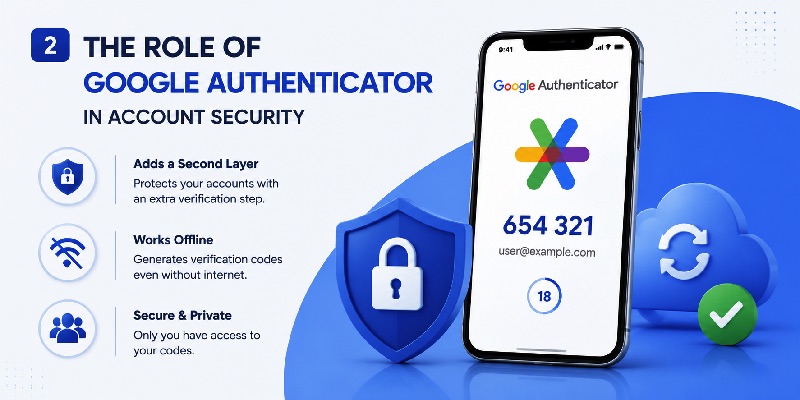
The core role of the google authenticator app store app is to support two-step or multi-factor sign-in. Instead of relying only on something you know, such as a password, a protected service asks for additional proof.
With a time-based authenticator, that additional proof is commonly a temporary code generated on a device you control. Two-factor authentication is designed to add a security layer beyond the username-and-password combination.
For anyone evaluating google authenticator app store, this matters because passwords can fail in several ways. People may reuse them across sites, enter them into fake login pages, or choose weak passwords that are easier to guess. Even a strong password can potentially be exposed during a compromise.
An authenticator adds another checkpoint so that possession of the password by itself may not be sufficient.
Why offline code generation is useful
One practical advantage highlighted in the google authenticator app store listing is offline code generation. The app can generate verification codes without a mobile-data or Wi-Fi connection.
That is useful on flights, while roaming, in buildings with poor reception, or during temporary network outages.
For users who manage many accounts, the app can also serve as a single place for multiple verification entries. Google’s current support documentation describes options for syncing codes with a Google Account, transferring accounts, organizing codes, and enabling a Privacy Screen that requires device verification before the app can be opened.
The google authenticator app store option is therefore best understood as a compact security utility: it stores or synchronizes authenticator entries, generates temporary codes, and helps you complete the second step of supported sign-ins.
It does not make an account invulnerable, but it can strengthen an account compared with relying on password-only access.
3. Why Use an Authenticator Instead of SMS Alone?
Greater separation from your phone number
A major reason users search google authenticator app store is that they want an alternative to receiving login codes by text message.
SMS can be convenient, but it depends on access to a phone number and the cellular messaging system. An authenticator-generated code is produced inside the app and does not require an incoming text message.
Apps such as Google Authenticator and Authy generate time-based one-time passcodes directly on the device instead of depending on SMS delivery.
That separation can be particularly helpful when mobile service is unavailable or when a user changes carriers.
For accounts that support multiple second-factor methods, an authenticator can also be combined with backup codes or another recovery method so that you do not rely on one authentication path.
Faster everyday sign-ins
The google authenticator app store app can also be convenient because the verification code is already available when you open the app. You do not have to wait for a text message to arrive.
For frequent logins, that can make two-factor authentication less disruptive.
Even with the convenience of google authenticator app store, there are still tradeoffs. If you lose the device and have not planned for recovery, you may have difficulty accessing protected accounts.
That is why setup should include backup codes, alternate recovery methods, or secure synchronization when the app supports it. Google specifically provides backup codes for situations in which you lose your phone or cannot use your normal second verification method.
For many users, the google authenticator app store choice is most valuable when it is part of a broader security setup: unique passwords, a password manager, 2FA, recovery information, and careful handling of QR codes and setup keys.
The authenticator is important, but the recovery plan is equally important.
📖 Read More Guides: Google Authenticator 2FA: Complete Guide to Two-Step Verification
4. How Google Authenticator Works on iPhone
QR codes, setup keys, and rotating codes
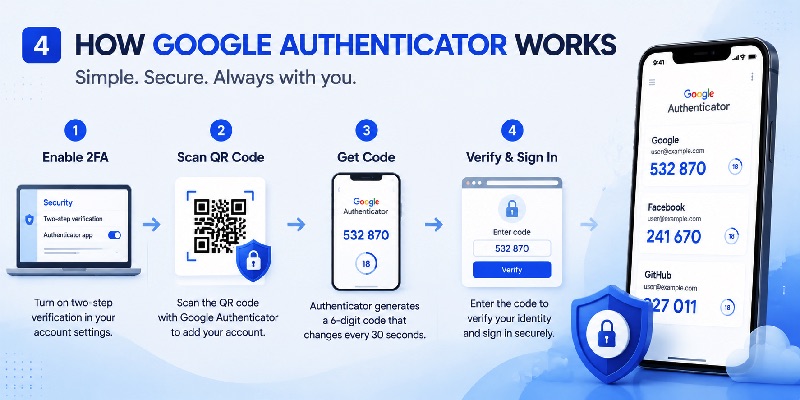
After downloading google authenticator app store, you normally connect an online account by scanning the QR code shown in that service’s security settings.
The QR code contains the information the authenticator needs to generate the appropriate time-based codes. Some services also provide a manual setup key if camera scanning is unavailable.
With google authenticator app store configured, the account appears in the app with a verification code that changes periodically.
When the website or app asks for a 2FA code, open Google Authenticator, locate the correct account, and enter the current code before it expires.
The workflow is intentionally simple: open the authenticator, locate the account, and use the current verification code.
Syncing and transferring accounts
A modern advantage of the google authenticator app store experience is that Google supports saving Authenticator codes to a Google Account.
Google’s support documentation also provides a manual transfer process. On the old device, users can choose Transfer accounts and Export accounts. The old phone creates one or more QR codes, which can then be scanned using Google Authenticator on the new phone.
Synchronization can make changing phones easier, while manual transfer provides another migration route.
However, you should still keep service-specific recovery codes where available. If a third-party account becomes inaccessible, its recovery process is controlled by that service rather than by the google authenticator app store listing itself.
Google also offers a Privacy Screen setting in Authenticator. When enabled, the app requires device verification such as a PIN, pattern, or biometric prompt before the codes are displayed.
That additional local protection can be useful if someone temporarily has access to your unlocked phone.
5. How to Download Google Authenticator from the App Store
Step-by-step installation on iPhone
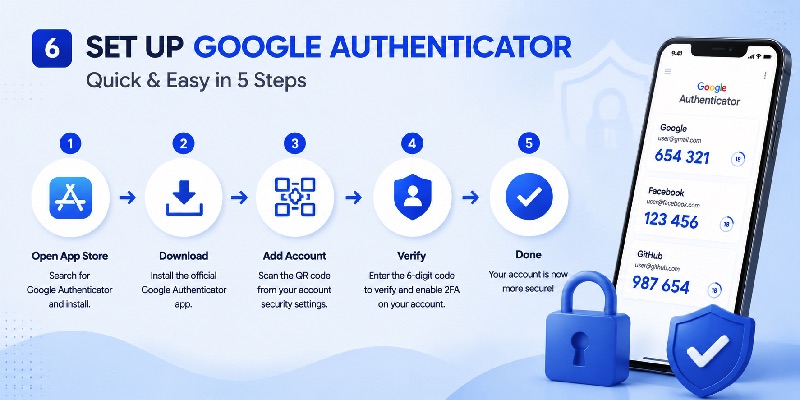
To install google authenticator app store on an iPhone:
- Open the Apple App Store.
- Search for Google Authenticator.
- Find the listing published by Google LLC.
- Open the official app page.
- Tap the normal iOS download button.
- Authenticate the download if your iPhone requests it.
- Open Google Authenticator after installation.
The official Google Authenticator listing is currently available for iPhone and iPad through Apple’s App Store.
After installation, open google authenticator app store and review the first-run options.
You can begin adding accounts, and you may be offered the option to use a Google Account for Authenticator code synchronization.
Do not scan random QR codes simply to test the application. Only add authentication QR codes from the official security settings of an account you control.
What to check before tapping download
The google authenticator app store search results may include other authenticator products with similar names.
Before downloading, check:
- Developer name
- App title
- Description
- Screenshots
- Privacy information
- Recent update information
- Official publisher identity
A familiar-looking icon is not enough to verify that an app comes from the publisher you expect.
If you typed 2google authenticator in app store, change the search to “Google Authenticator” if the results are confusing.
The official Google listing identifies Google LLC as the developer and describes offline verification-code generation and Google Account synchronization.
Once the google authenticator app store app is installed, the next step is not simply to leave it on your home screen.
You need to enable two-factor authentication inside each account you want to protect and then link that account to the authenticator.
Installation gives you the tool; account enrollment activates the protection.
Download Authenticator App
Secure your accounts with fast, reliable two-factor authentication. Download now and protect your login in seconds.
📖 Read More Guides: Google Account Two Step Verification: Complete Setup Guide
6. How to Set Up Google Authenticator After Installation
Add your first online account
Open the security settings of the account you want to protect and look for terms such as:
- Two-factor authentication
- Two-step verification
- Authenticator
- Verification app
- Authentication app
- TOTP
Choose the authenticator-based option when available.
The service should display a QR code or setup key.
Now open google authenticator app store, choose the option to add an account, and scan the QR code.
The new entry should appear with a temporary verification code.
Return to the website or app where you enabled 2FA and enter the displayed code to confirm that the configuration works.
Do not close the security setup page until the service confirms that enrollment has been completed.
Save recovery options immediately
After connecting an account through google authenticator app store, store any backup or recovery codes provided by the service in a secure location.
This step is easy to skip, but it can become essential if your phone is lost, damaged, erased, or otherwise unavailable.
Google’s account support includes backup codes specifically for situations where normal two-step verification methods cannot be used.
If you use google authenticator app store with Google Account synchronization, review which Google Account is receiving the synced Authenticator codes.
If you prefer manual migration, learn the transfer workflow before replacing or erasing your existing phone.
Finally, consider enabling Privacy Screen inside google authenticator app store. Google says this feature can require your device verification before Authenticator opens and displays codes.
Repeat the setup process for other accounts that support authenticator-based 2FA.
It is better to enroll accounts carefully one at a time than to rush through multiple services without saving recovery information.
7. Best Authenticator Apps on the App Store in 2026
Google Authenticator, Microsoft Authenticator, and 2FAS
The google authenticator app store app is an excellent default for users who want a relatively simple TOTP-focused experience and already use Google services.
Its current App Store listing emphasizes offline code generation and synchronization through a Google Account.
Compared with google authenticator app store, Microsoft Authenticator offers a broader feature set.
Its current App Store description includes multi-factor authentication, passwordless sign-in, password autofill, and additional account-management options for Microsoft personal, work, and school accounts.
That makes Microsoft Authenticator particularly relevant to people who rely heavily on Microsoft accounts or Microsoft-based workplace environments.
2FAS is another notable option.
Its App Store listing describes the app as free and open source and highlights token backups together with passcode or biometric protection.
Users who value open-source software and a privacy-focused design may find 2FAS appealing.
Proton Authenticator and Twilio Authy
Proton Authenticator is another current competitor available through the App Store.
Proton describes the authenticator as open source and end-to-end encrypted, with local-first storage, import functionality, backup and export options, offline support, and no requirement for a Proton account to use the app.
For privacy-focused users comparing google authenticator app store alternatives, Proton Authenticator is therefore worth considering.
Twilio Authy also remains available for iPhone and iPad. Its official materials emphasize two-factor authentication tokens, encrypted cloud backup, and multi-device functionality.
There is no single “best” application for every user.
The best alternative to google authenticator app store depends on whether your priority is simplicity, Microsoft integration, open-source software, privacy controls, cross-device recovery, or a particular backup model.
The important point is to choose a reputable Authenticator App, understand how it stores or synchronizes authentication information, and establish a recovery method before you need one.
📖 Read More Guides: How to Use Google Authenticator: Complete Setup and 2FA Guide
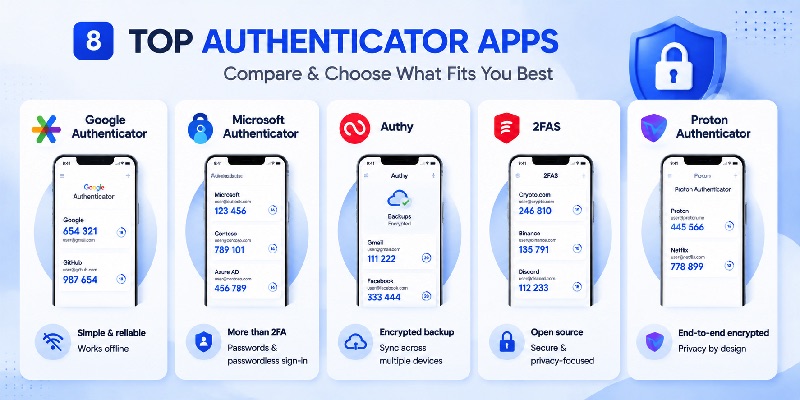
8. Google Authenticator vs Microsoft Authenticator vs 2FAS vs Proton vs Authy
Quick comparison by use case
When evaluating google authenticator app store, it helps to compare apps according to the problem they solve rather than relying only on ratings.
A google authenticator app store comparison is most useful when it focuses on recovery, privacy, platform integration, backup, and migration rather than popularity alone.
Google Authenticator is a straightforward choice for TOTP codes, offline generation, Google Account synchronization, and manual transfer.
Microsoft Authenticator is attractive for Microsoft-heavy environments because its listing describes MFA, passwordless sign-in, autofill, and Microsoft account integration.
2FAS focuses on open-source authentication, backup, and app-level passcode or biometric protection.
Proton Authenticator emphasizes open-source software, end-to-end encryption, privacy, local-first storage, and import/export capabilities.
Twilio Authy places greater emphasis on encrypted backups and multiple-device convenience.
| App | Best Fit | Notable Strengths |
| Google Authenticator | Simple 2FA and Google users | Offline codes, Google Account sync, transfer tools |
| Microsoft Authenticator | Microsoft accounts and workplaces | MFA, passwordless features, Microsoft integration |
| 2FAS | Open-source-focused users | Open source, backups, biometric/passcode protection |
| Proton Authenticator | Privacy-focused users | Encryption, import/export, local-first design |
| Twilio Authy | Users prioritizing backup and multiple devices | Encrypted backup, multi-device support |
Which one should you choose?
Choose google authenticator app store if you want a familiar, uncomplicated authenticator and are comfortable with Google’s synchronization and transfer model.
Choose Microsoft Authenticator if your school, workplace, or personal workflow depends heavily on Microsoft accounts.
Consider 2FAS if open-source transparency and app-level protection are important to you.
Consider Proton Authenticator if privacy-focused encryption, migration tools, and control over authentication data are priorities.
Authy may suit users who prefer its encrypted backup and multiple-device model.
Do not migrate simply because another app becomes popular.
Moving authentication tokens affects access to important accounts.
Before switching away from google authenticator app store, make sure the destination app supports your accounts, understand its migration method, and verify that the new entries work before deleting anything from the previous authenticator.
9. Common Download, Setup, and Recovery Problems
The code is rejected
If a code from google authenticator app store is rejected, first confirm that you selected the correct account entry and entered the current verification code before it changed.
Also check that your device date and time are configured correctly. Time-based authentication depends on synchronized time.
If the problem appears immediately after setup, return to the service’s security settings and confirm that authenticator enrollment was actually completed.
Scanning a QR code without finishing the verification step on the website may mean that the setup has not been fully activated.
If only one account is affected, use that service’s official recovery or 2FA troubleshooting options rather than deleting all of your Authenticator entries.
You changed or lost your phone
If you still have your old device, use synchronization or the available transfer options before erasing it.
Google currently documents a process in which accounts are exported from the old device as QR codes and then imported by scanning those QR codes with Google Authenticator on the new phone.
If your Authenticator codes were synchronized through a Google Account, signing in to the corresponding Google Account can also provide access to synced entries.
If the old phone is gone, google authenticator app store cannot automatically restore access to every third-party account.
Use the recovery method offered by each service, such as a previously saved backup code, another registered authentication method, or the provider’s official account-recovery process.
The best time to solve recovery is before an emergency.
While your accounts are working, confirm that you have current recovery information and backup options.
Whether you use google authenticator app store or another Authenticator App, migration and recovery should be part of your initial security setup rather than an afterthought.
10. Security Best Practices After You Download an Authenticator
Protect the authenticator itself
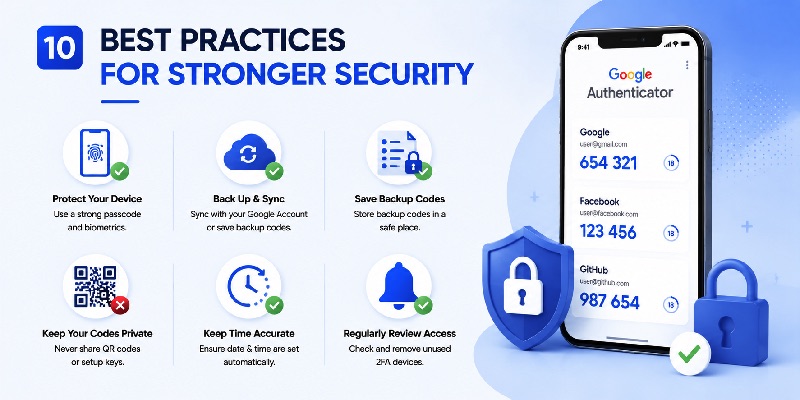
After installing google authenticator app store, protect your phone with an appropriate device passcode and biometric authentication when available.
Consider enabling Google Authenticator’s Privacy Screen if you want local device verification before the app displays your codes.
Never share a 2FA QR code, manual setup key, current authenticator code, or recovery code with someone who unexpectedly asks for it.
Treat QR codes and manual setup keys as sensitive credentials because they are used to establish the secret from which authentication codes are generated.
You should also avoid taking unnecessary screenshots of authentication QR codes or leaving them in shared folders.
Keep recovery separate and tested
Do not store every recovery method in the same place.
If your only backup codes are stored on the same phone that contains google authenticator app store, losing that phone could remove access to both your authenticator and your backup information.
Store recovery information securely in a separate location that you can access when needed.
If google authenticator app store is part of your security routine, review your important accounts periodically.
Remove devices you no longer use, update outdated recovery information, and check whether your most sensitive accounts offer additional authentication options.
The google authenticator app store app can be a valuable layer, but online security works best when multiple safeguards support one another.
If you migrate to another authenticator, test the new application before deleting your existing entries.
Keep the old device available until you have confirmed that your most important accounts accept codes generated by the new authenticator.
A careful transition is safer than moving everything at once and discovering a recovery problem after the old authentication information has already been erased.
For most iPhone users looking for a simple and recognizable two-factor authentication solution, google authenticator app store remains a strong starting point. Google Authenticator offers offline code generation, Google Account synchronization, manual account transfer, and Privacy Screen functionality while keeping the everyday sign-in process relatively straightforward.
The alternatives are worth considering when you have more specific requirements. Microsoft Authenticator can fit Microsoft-heavy workflows, 2FAS emphasizes open-source authentication, Proton Authenticator focuses strongly on privacy and encryption, and Twilio Authy emphasizes backup and multi-device convenience.
Whichever option you choose, the most important steps are to download the legitimate application, enable two-factor authentication on the accounts that matter, save recovery options securely, and understand how you will migrate your authentication data before replacing your phone.
Download Authenticator App
Secure your accounts with fast, reliable two-factor authentication. Download now and protect your login in seconds.